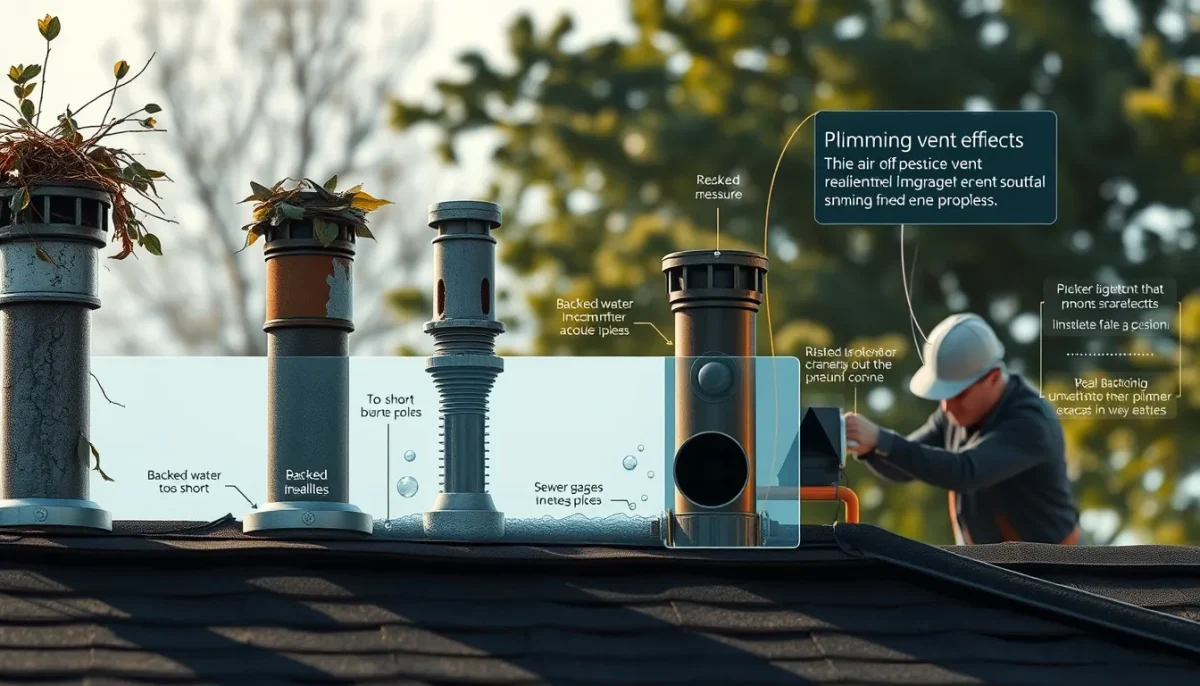
Your home’s plumbing ventilation usually goes unnoticed until something goes wrong — a drain that gurgles, a toilet that bubbles as it refills, or a whiff of sewer smell that won’t go away. Yet proper venting is what keeps your drains flowing and keeps sewer gas out of the house. Plumbing vents equalize air pressure inside the drain-waste system so that a rush of draining water can’t siphon the water out of a fixture’s P-trap — and that trap seal is the only thing standing between your living space and the sewer. When a vent is blocked and a trap is siphoned or evaporates dry, sewer gas can seep indoors. As the Wisconsin Department of Health Services notes, that gas is a mix that includes hydrogen sulfide and methane and can enter a home through a dry drain trap or a blocked plumbing roof vent.
As a homeowner, understanding how your plumbing vent system works can save you time, money, and headaches. This guide walks through the most common plumbing vent problems, how to recognize them from the symptoms you notice indoors, and the preventative measures that keep your home’s plumbing running smoothly.
Most likely causes of vent trouble (start here)
Most vent complaints show up as the same handful of symptoms — gurgling drains and toilets, slow drainage across several fixtures at once, a bubbling toilet, or a sewer smell. Here are the usual culprits, roughly in the order you should suspect them:
- A clogged or obstructed vent terminal — leaves, debris, or a bird or squirrel nest at the roof opening. This is the most common cause, and it shows up as gurgling drains, slow draining in multiple fixtures, and sewer odor.
- Frost closure (cold climates) — the vent ices shut in deep cold. The tell is the same gurgling and slow draining, but only during freezing weather.
- A dry or siphoned trap — a rarely used fixture’s trap evaporates, or a venting fault siphons it. You get a sewer smell from one drain with no other symptoms; running water to refill the trap often fixes it.
- A cracked, leaking, or disconnected vent pipe — sewer smell inside a wall, attic, or specific room, sometimes with water stains or mold near the hidden pipe.
- An undersized or poorly placed vent — chronic gurgling and slow draining, often present since the home was built or since a remodel. This is a design and code problem, not a clog.
- Storm or physical damage to the roof vent — a sudden onset of drainage problems after severe weather, usually with visible damage at the roof.
What you need to check or clear a vent
Clearing a simple vent clog is within reach for a comfortable, careful DIYer — but only if you can get onto the roof safely. Gather these first:
- A sturdy ladder and a helper to foot it — safe roof access is the biggest part of the job, not the clog
- A flashlight or headlamp — to look down into the vent opening
- A plumber’s drain snake or auger — a longer sewer auger reaches a clog deeper in the stack
- A garden hose — to flush the vent and confirm it drains freely
- Work gloves, non-slip footwear, and fall protection — especially on a steep or wet roof
- A mirror or phone camera — to inspect the terminal and check for nests without leaning over it
DIY vs. a pro: what clearing or repairing a vent costs
Clearing a simple clog at the vent terminal yourself costs little more than your time and a garden hose or auger you may already own. If the blockage is deep in the stack, the vent is frozen, or the pipe is cracked, undersized, or wrongly placed, a licensed plumber is the safer call — and any repair that means cutting into a stack, correcting sizing, or working inside a wall runs well above a simple clearing. Roof height, pitch, and access all move the number, and any structural or code correction is a professional job. Treat any figure as a ballpark until a plumber has looked at your specific setup.
DIY clog clear (hose/auger): low, mainly your time · Pro vent clearing: service-call range · Vent repair / resize / re-vent: higher, varies by access
The real hazard here is the roof, not the drain
The most dangerous part of any vent job is getting to it. Vents terminate on the roof, and a fall from height is far more likely to hurt you than the clog ever will. Do not work on a roof that is wet, icy, frost-covered, or steep. Use a stable ladder someone is footing, keep three points of contact, never overreach or lean out over the edge to reach a vent, and stay well clear of overhead power lines. If the vent is hard to reach or the roof is at all unsafe, hire a pro — no clog is worth a fall.
There is also a sewer-gas note. A blocked vent can let sewer gas back up through dry traps indoors. Hydrogen sulfide is toxic and, like the methane also present, flammable, and both can collect in low, enclosed spaces such as basements, where the U.S. Occupational Safety and Health Administration warns they can build to dangerous levels. Ventilate the area, refill any dry traps by running water, and if you smell strong sewer gas in an enclosed space, leave and get fresh air before troubleshooting further.
Understanding Plumbing Vents
Before diving into specific problems, it helps to understand what plumbing vents actually do. These vertical pipes, which typically run up through your roof, are part of the drain-waste-vent system and serve two jobs: they let air into the drain lines so water and waste can flow freely, and they equalize pressure so that a surge of draining water can’t siphon the water seal out of a fixture’s P-trap. That trap seal — the small plug of water in the U-bend under every drain — is what blocks sewer gas from rising into the room. Without adequate venting, drains gurgle and run slow, traps get siphoned dry, and sewer gas can find its way indoors. Vent size, how far the vent terminates above the roof, and how far it sits from windows and air intakes are all governed by the plumbing code — the International Plumbing Code, for example, sets those requirements so vents work reliably and don’t draw sewer gas back toward living spaces.
Common Plumbing Vent Problems
1. Clogged Vent Pipes
One of the most frequent issues is clogged vent pipes. Over time, leaves, twigs, and other debris can accumulate in the vent opening, obstructing airflow. In some cases, small animals like birds or squirrels may even build nests inside the vent pipe.
Symptoms:
- Slow draining in multiple fixtures
- Gurgling noises from drains or toilets
- Foul odors emanating from drains
Solution:
For a minor blockage at the vent terminal, a homeowner who can get onto the roof safely can often clear it with a snake and a garden hose. For a deeper clog, a frozen vent, or anything that involves the pipe itself, call a licensed plumber. Work through the sequence below.
Clearing a blocked vent from the roof, step by step
- Confirm the symptoms point to the vent — gurgling and slow draining across several fixtures at once (not just one) suggest a venting problem rather than a single clogged drain.
- Get onto the roof safely — or stop — only on a dry, low-slope roof, with a footed ladder and a helper. If the roof is wet, icy, or steep, do not go up; call a pro (see the safety note above).
- Inspect the vent opening — shine a light down the pipe and look for leaves, a bird or squirrel nest, or ice. Clear anything you can reach by hand or with the snake.
- Run a drain snake down the vent — feed the auger down the stack to break up or hook out a deeper blockage.
- Flush with a garden hose — send water down the vent. If it backs up at the opening, the clog is still there; if it drains freely, the vent is clear.
- Re-test indoors — run water and flush toilets to confirm the gurgling and slow draining are gone. If they persist, the problem is deeper — frost, sizing, or a cracked pipe — and needs a plumber.
2. Frozen Vent Pipes
In colder climates, vent pipes can freeze during winter months. Warm, moist air rising from the drain system condenses near the cold vent opening and freezes, gradually narrowing and then capping the pipe with ice — a phenomenon known as frost closure. This can completely block airflow, causing plumbing problems throughout the home. Plumbing codes recognize the risk directly: under the International Plumbing Code’s frost-closure provision, in areas with a very cold outdoor design temperature, vent pipes passing through the roof must be increased in diameter so a thin opening doesn’t ice shut.
Symptoms:
- Plumbing problems that only occur during cold weather
- Ice visible around the vent pipe on the roof
- Slow draining and gurgling noises in multiple fixtures
Solution:
Insulating vent pipes, particularly in unheated attic spaces, can help prevent freezing. In cold regions, a vent sized to code (a larger diameter through the roof) is the durable fix; some homeowners in extremely cold climates also add heat tape. Never try to thaw a rooftop vent with an open flame — sewer gas is flammable, and the roof is a fall hazard.
3. Improperly Sized Vent Pipes
Vent pipes that are too small for the plumbing system’s demands can lead to persistent venting problems. This is often a result of poor initial installation or renovations that didn’t account for increased plumbing needs.
Symptoms:
- Chronic slow draining throughout the house
- Frequent gurgling noises from multiple fixtures
- Sewer odors in the home
Solution:
Proper sizing of vent pipes is governed by the plumbing code and depends on factors such as the number of fixture units, the length of the vent, and local requirements. Correcting an undersized vent is a job for a licensed plumber, and in some cases means replacing the vent with appropriately sized pipe.
4. Leaking Vent Pipes
Cracks, loose connections, or damage to vent pipes can allow sewer gases to enter your home. These leaks are often difficult to detect because vent pipes are typically hidden within walls or attic spaces.
Symptoms:
- Persistent sewer odors in the home
- Visible water stains on walls or ceilings near plumbing fixtures
- Mold growth in unexpected areas
Solution:
Regular inspections of visible vent-pipe sections can catch leaks early. For hidden pipes, professional plumbers can use specialized cameras to locate leaks. Repairs may involve sealing small cracks or replacing sections of damaged pipe.
5. Incorrect Vent Placement
Improperly placed vents can lead to ineffective ventilation and drainage problems. This issue is often seen in DIY plumbing projects or renovations carried out by inexperienced contractors, and it can also mean a vent terminating too close to a window or air intake, which the code specifically restricts.
Symptoms:
- Inconsistent drainage issues in specific areas of the home
- Gurgling noises from fixtures far from the main vent stack
- Sewer odors in particular rooms
Solution:
Correct vent placement is essential for effective ventilation, and the plumbing code sets both how vents connect to fixtures and how far a vent terminal must sit from doors, openable windows, and air intakes. Correcting placement usually means a professional plumber redesigning and reinstalling portions of the venting system.
6. Damaged Vent Pipes
External factors such as severe weather, falling tree branches, or animal activity can damage vent pipes. This damage may not be immediately apparent but can lead to significant plumbing issues over time.
Symptoms:
- Sudden onset of plumbing problems following severe weather
- Visible damage to the portion of the vent pipe on the roof
- Increased frequency of drain clogs or slow draining
Solution:
Regular roof inspections, especially after severe weather, can help identify damaged vent pipes before they cause major problems. Repairs may involve patching small damage or replacing entire sections of vent pipe — work best left to a professional given the roof-height hazard.
Preventative Measures and Maintenance
To avoid these common plumbing vent problems, consider implementing the following preventative measures:
- Regular Inspections: Conduct visual inspections of your roof and accessible vent pipes at least twice a year, and after severe weather events.
- Professional Maintenance: Schedule periodic plumbing inspections with a licensed plumber to catch potential issues early.
- Proper Insulation: Ensure vent pipes are adequately insulated and sized for the climate, especially in cold regions prone to frost closure.
- Roof Maintenance: Keep your roof clear of debris and trim overhanging branches to prevent damage to vent pipes.
- Keep traps wet: Run water in rarely used fixtures (guest baths, floor drains) now and then so their traps don’t evaporate dry and let sewer gas in.
When to Call a Professional
While a minor clog at the vent terminal can sometimes be cleared by a careful homeowner, many plumbing vent problems require professional expertise. If you experience persistent drainage issues, foul odors, or gurgling noises from multiple fixtures — or if the vent is frozen, cracked, undersized, or simply out of safe reach on the roof — it’s best to consult a licensed plumber. Attempting complex vent repairs without the proper knowledge, tools, and fall protection can lead to more severe problems and serious injury.
FAQs About Plumbing Vent Problems
Q: How often should plumbing vents be inspected?
A: A visual inspection once or twice a year, plus a check after major storms, is reasonable for most homes. Homes surrounded by trees or in areas with frequent severe weather may need more frequent attention.
Q: Can I install an Air Admittance Valve (AAV) myself?
A: While a skilled DIYer can install an AAV, it’s best to consult a professional. Proper installation is essential for the valve to function, and local building codes may restrict or specifically regulate where AAVs are allowed.
Q: What should I do if I smell sewer gas in my home?
A: First check for dry P-traps in rarely used fixtures and run water to refill them. If the odor persists, it could indicate a vent problem. Ventilate the area, and if the smell is strong in an enclosed space such as a basement, leave and get fresh air, then contact a plumber — sewer gas contains hydrogen sulfide and methane, which can be harmful and are flammable.
Q: Are there any DIY solutions for minor vent blockages?
A: For a minor blockage near the vent terminal, you can try flushing the vent with a garden hose or running a plumbing snake down it — but only if you can get onto the roof safely. Never work on a wet, icy, or steep roof, and don’t hesitate to call a professional if the blockage persists.
Q: How can I tell if my plumbing vent system is adequate for my home?
A: Signs of an inadequate vent system include frequent drain clogs, gurgling sounds, slow drainage in multiple fixtures, and sewer odors. If you’re experiencing these issues, have a professional plumber assess whether the system is sized and placed to code.
Maintaining a Healthy Plumbing Vent System
Understanding and maintaining your home’s plumbing vent system is central to the overall health of your plumbing and the comfort of your living space. By recognizing the common warning signs — gurgling, slow drains, bubbling toilets, and sewer odor — and matching them to the likely cause, you can address problems early and avoid costly repairs.
Remember that while a simple vent-terminal clog may be within reach for a careful homeowner, many problems — and any that involve the roof, the pipe itself, or the sewer gas that a failed vent lets in — call for a licensed plumber. When in doubt, don’t risk a fall or a hidden leak: get a professional to look at it.
Sources & verification
- Sewer gas composition (hydrogen sulfide, methane, ammonia), how it enters a home through a dry drain trap or a blocked plumbing roof vent, and its health and explosion hazards — Wisconsin Department of Health Services, Air: Sewer Gas.
- Hydrogen sulfide toxicity and flammability, and how it collects in low, enclosed spaces — OSHA, Hydrogen Sulfide in Workplaces.
- Hydrogen sulfide flammability and explosive range — OSHA, Hydrogen Sulfide Hazards.
- Venting requirements — vent terminal extension above the roof and required distance from doors, openable windows, and air intakes — 2021 International Plumbing Code, Chapter 9 (Vents).
- Frost closure — code requirement to increase vent diameter through the roof in cold-climate design temperatures — International Plumbing Code, Frost Closure provision (via UpCodes).
Last verified: Jul 2026