Imagine trying to clean a fogged-up mirror with a dry cloth—the more you wipe, the more smudges you create. This is akin to the challenge of using hard water in your home. Hard water, laden with minerals like calcium and magnesium, leaves behind a trail of residue, affecting everything from your dishes to your plumbing. A water softener is like that perfect cloth that wipes your mirror clean, leaving no streaks or spots behind. Just as a clear mirror reflects a true image, softened water reflects the true potential of your home, ensuring every drop is as effective and efficient as possible.
Hard water is common across the United States—an estimated 85% of U.S. homes have some degree of hardness, and the U.S. Geological Survey classifies most of the country in the moderately-hard-to-very-hard range. Hard water can leave scale on fixtures, make soap and detergent less effective, and leave skin and hair feeling dry. But “hard” is a matter of degree: if your water tests soft or only slightly hard, a softener may be unnecessary. The honest place to start is a hardness test, not a purchase—so treat the sections below as a way to decide whether the numbers justify a softener for your home.
In this comprehensive guide, we’ll delve into the world of water softeners, exploring how they work, the types available, and the myriad benefits they offer. We’ll also address common misconceptions, provide maintenance tips, and demonstrate how investing in a water softener can lead to long-term savings and enhanced comfort in your home.
Do you actually need one? (start here)
- Test your hardness first — the single most useful step. If your water comes back below about 7 gpg (120 mg/L), it’s soft to moderately hard and a softener usually isn’t worth it.
- Chalky white scale on fixtures — crusty buildup on faucets, showerheads, kettles, and inside the water heater is the clearest sign of genuinely hard water.
- Soap that won’t lather — filmy dishes and stiff, dingy laundry despite plenty of detergent point to hardness minerals binding the soap.
- Spots and cloudy film on glassware — mineral residue left after glasses and fixtures air-dry.
- A water heater losing efficiency or failing early — most likely with very hard water (above ~10.5 gpg / 180 mg/L); scale insulates the heating surfaces.
What to check first
- Hardness test strips (dip-and-compare) — the cheapest quick check, about $8–$15 for a pack
- A mail-in lab test or titration kit if you want an exact grains-per-gallon number
- Your utility’s annual water-quality report (Consumer Confidence Report), which often lists hardness
- On a private well, test for hardness alongside the usual well panel
Softener cost: DIY vs. pro install
Softener unit: ~$400–$2,500 installed · Salt: ~$5–$25/bag · Pro install: often a few hundred $
Before you buy: sodium and local salt rules
Salt-based softeners add sodium to your water in proportion to its hardness, so anyone on a sodium-restricted diet should either leave the kitchen cold tap on a bypass, use a reverse-osmosis tap for drinking water, or choose a potassium-chloride softener instead. Just as important: some municipalities restrict or ban salt-based (brine-discharging) softeners because the discharge raises salinity in wastewater — California law, for example, lets local agencies limit or prohibit residential self-regenerating units. Check your local rules before buying.
Understanding Water Softeners
How Water Softeners Work
At its core, a water softener is a filtration system that removes minerals that cause water hardness, primarily calcium and magnesium ions. The process of water softening begins when hard water enters the softener’s mineral tank. This tank is filled with tiny resin beads, which carry a negative charge. Since calcium and magnesium ions are positively charged, they are attracted to the resin beads as the water flows through the tank.
This process is known as ion exchange. As the hard water passes through, the resin beads capture the calcium and magnesium ions, effectively “softening” the water. In exchange, sodium or potassium ions are released into the water. Over time, the resin beads become saturated with the hard minerals and lose their effectiveness. This is when the water softener enters its regeneration cycle.
During regeneration, the water softener flushes the resin beads with a brine solution, which contains a high concentration of sodium or potassium ions. The brine solution displaces the hard minerals from the beads, which are then flushed out of the system through a drain. The resin beads are now refreshed and ready to soften more water.
Types of Water Softeners
When considering a water softener for your home, it’s important to choose the right type based on your specific needs, water hardness level, and maintenance preferences. Here’s a detailed look at the most common types of water softeners available:
Salt-Based Ion Exchange Softeners
How It Works:
This is the most common and traditional type of water softener. It uses sodium chloride (salt) to regenerate the resin beads that remove the hardness from the water. The process involves the aforementioned ion exchange, where calcium and magnesium are swapped for sodium ions.
Advantages:
Highly effective at removing hardness, providing consistently soft water throughout the home. It is particularly beneficial in areas with extremely hard water.
Disadvantages:
Requires regular replenishment of salt and periodic maintenance of the system. Some users may be concerned about the added sodium in their water.
Salt-Free Water Conditioners
How It Works:
Rather than removing minerals, salt-free water conditioners alter the chemical structure of the minerals, preventing them from forming scale on surfaces. This process, often called Template Assisted Crystallization (TAC), changes the calcium and magnesium into a crystalline form that doesn’t adhere to surfaces.
Advantages:
These systems do not require salt, making them a low-maintenance option. They also don’t add sodium to the water, which can be a health consideration for some households.
Disadvantages:
Less effective in areas with very high water hardness, and they do not remove the minerals, which means the water isn’t technically “softened.”
Dual-Tank Water Softeners
How It Works:
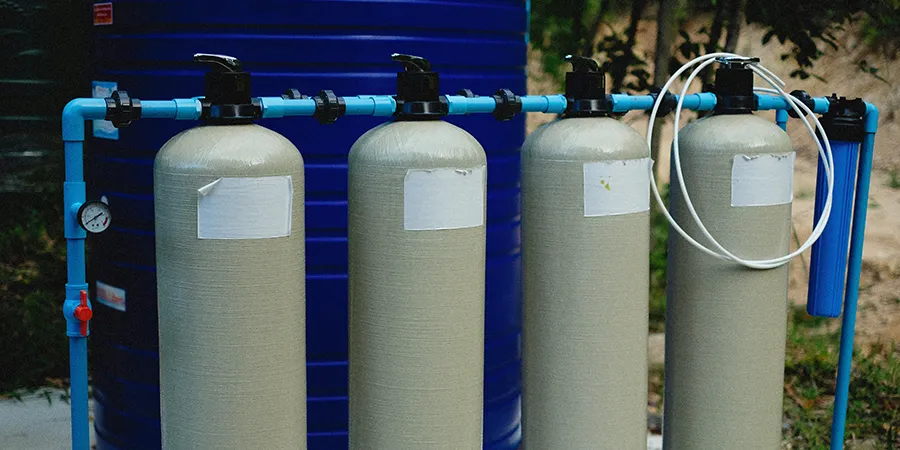
Dual-tank systems are designed for homes with high water usage or those that require a continuous supply of soft water. These systems have two resin tanks, allowing one tank to regenerate while the other is in use, ensuring soft water is always available.
Advantages:
Ideal for larger households, like a family of five, where water demand is high. The continuous operation means there’s never a downtime for soft water availability.
Disadvantages:
Generally more expensive and requires more space for installation.
Magnetic and Electronic Softeners
How It Works:
These systems use magnetic fields or electronic pulses to alter the electromagnetic properties of the minerals in the water, preventing them from forming scale. They are installed on the outside of the pipes and do not require any plumbing alterations.
Advantages:
Easy to install, requires no salt or chemicals, and has low maintenance. They are compact and energy-efficient.
Disadvantages:
Effectiveness is often debated, and independent testing has not consistently shown these devices reduce scale the way salt-based softeners do — especially in very hard water.
By understanding how these systems work and the benefits they offer, you can make an informed decision about which type of water softener is best suited for your home.
Positive Impacts on Household Appliances, Plumbing, and Personal Care
Appliances: Protecting Your Investments
For a larger household, the strain on appliances like dishwashers, washing machines, and water heaters is significant, and hard water adds to it. When calcium and magnesium are present in water, they can form scale deposits inside appliances. In a water heater, that scale acts as an insulator on the heating surfaces, forcing the unit to work a little harder to reach the same temperature.
How large that effect is depends on your hardness, and the honest numbers are modest. A U.S. Department of Energy study that ran water heaters under accelerated hard-water conditions found the efficiency of gas storage heaters declined only about 5% after the equivalent of roughly 20 years of scale, while electric heaters held their efficiency but shed heating elements to scale-related failures. So the realistic picture is a small efficiency loss plus a real risk of earlier component failure and repairs — not a dramatic overnight energy penalty. Softening or otherwise treating the water reduces that scale buildup.
Plumbing: Ensuring Smooth Water Flow
Hard water affects plumbing as well as appliances. Over many years, mineral scale can build up inside pipes — especially older galvanized-steel lines and around fittings, valves, and aerators — gradually narrowing them and reducing flow. In severe, long-neglected cases this can contribute to persistent restrictions that need professional attention. Modern copper and PEX supply lines are far less prone to serious scaling, so a softener’s plumbing benefit is real but usually gradual rather than the difference between working pipes and a full re-pipe.
In an urban environment, where plumbing systems might already be under strain due to older infrastructure or high demand, the benefits of a water softener can be more pronounced. Softened water keeps scale from accumulating, helping water flow smoothly and reducing the risk of scale-related plumbing issues.
Personal Care: Enhancing Skin, Hair, and Laundry
Hard water’s impact on personal care can be felt every time you step out of the shower. The minerals in hard water can leave behind a residue that clings to skin and hair, leading to dryness, irritation, and dullness. Soap and shampoo don’t lather as effectively in hard water, which means you end up using more product without getting the desired results.
Soft water, on the other hand, allows soaps and shampoos to lather more effectively and rinse away completely, leaving skin feeling softer and hair looking shinier and healthier. For a household of five, where everyone has different skin and hair needs, soft water can be a game-changer, reducing the need for additional moisturizers and conditioners.
When it comes to laundry, the benefits of a water softener are just as significant. Hard water can cause clothes to feel stiff and look dingy, as the minerals in the water bind with the detergent, making it less effective. This can also lead to soap scum buildup on fabrics, which wears them out faster. With soft water, your clothes come out of the wash feeling softer, looking brighter, and lasting longer. Additionally, because detergents work more effectively in soft water, you can use less detergent per load, saving money on laundry supplies.
Taste and Stains: Improving Water Quality Throughout the Home
The taste and smell of your water can also be affected by hardness. Minerals like calcium and magnesium, as well as iron, can give water an unpleasant taste or odor. While a water softener doesn’t filter out contaminants like chlorine or bacteria, it does remove the minerals that can cause these issues, leading to better-tasting water. This can be especially beneficial if you’re in an urban area where water quality might be compromised by aging infrastructure.
In addition to improving the taste and smell of your water, a water softener can help prevent the staining of dishes, glassware, and fixtures. Hard water often leaves behind unsightly spots and streaks, even after washing. Soft water eliminates these issues, keeping everything in your home looking clean and new.
Long-Term Cost Savings and Maintenance Considerations
Cost Savings: An Investment That Pays Off
While the initial cost of a water softener system can range from about $400 to $2,500 installed depending on the type and size, in hard-water homes it can pay back some of that over time. The savings tend to come from a few areas — though how much you actually save scales directly with how hard your water is:
- Energy Savings
Keeping scale out of your water heater helps it hold its rated efficiency. Independent testing points to a modest gain — on the order of a few percent for gas storage heaters over their life — rather than the dramatic savings some vendors advertise. Worthwhile in very hard water, minor where water is only moderately hard. - Reduced Scale-Related Wear
By slowing scale buildup, softer water can reduce scale-driven wear on water heaters, dishwashers, and washing machines. That tends to mean fewer scale-related repairs; the dollar value depends heavily on your hardness level. - Reduced Maintenance Costs
Softened water reduces scale on plumbing and appliances. Fewer clogged aerators, less descaling, and fewer scale-driven repairs mean lower maintenance costs overall. - Less Soap and Detergent
With soft water, you’ll need less soap, shampoo, and detergent to achieve the same cleaning results. This not only saves money on household supplies but also reduces the environmental impact of using excess cleaning products.
Maintenance Considerations: Keeping Your Water Softener Running Smoothly
While water softeners offer numerous benefits, they do require some maintenance to keep them running effectively. Here are a few key maintenance tasks to keep in mind:
- Check Salt Levels Regularly
For salt-based systems, it’s important to regularly check the salt level in the brine tank and add more salt as needed. This ensures that the system can continue to regenerate the resin beads and provide softened water. - Clean the Brine Tank
Over time, the brine tank can accumulate dirt and debris, which can affect the performance of the system. It’s a good idea to clean the brine tank once a year to keep it in optimal condition. - Schedule Regular Servicing
Just like any other appliance, a water softener benefits from regular servicing by a professional. This can help catch any potential issues early and ensure that the system continues to operate efficiently. - Monitor Water Quality
It’s also a good idea to periodically test your water quality to ensure that the water softener is working as expected. If you notice any changes in water hardness, it may be time to service the system.
Addressing Common Misconceptions About Water Softeners
Myth 1: Softened Water Is Harmful Due to Sodium Content
One common concern is that softened water contains high levels of sodium, which genuinely matters for anyone on a low-sodium diet. Salt-based softeners do add sodium: through ion exchange, roughly 8 mg of sodium per liter is added for each grain per gallon of hardness removed, according to University of Nebraska Extension. For moderately hard water that works out to roughly 10–20 mg in an 8-ounce glass — less than what you’d find in a slice of bread — but the amount is proportional to your hardness, so very hard water adds noticeably more.
For those who are still concerned, there are salt-free water conditioning options available, you could keep the kitchen tap on a bypass, or you could use a reverse osmosis system to remove the sodium from your drinking water. (See the caution near the top of this guide.)
Myth 2: Soft Water Feels “Slimy”
Another misconception is that soft water feels “slimy” or that it doesn’t rinse off soap effectively. What people are actually experiencing is the absence of soap scum. With hard water, soap doesn’t lather well and leaves a residue on the skin, giving the impression that it rinses off easily. In contrast, soft water allows soap to lather fully and rinse away cleanly, leaving your skin feeling soft and moisturized.
Myth 3: Water Softeners Are Only Necessary in Rural Areas
While it’s true that rural areas with well water often have hard water, urban areas are not immune. City water can also be hard, and the impact of hard water on urban plumbing systems, which may already be stressed by high demand and aging infrastructure, can be significant. A water softener is worth considering for any home whose water tests genuinely hard — but the deciding factor is the hardness number, not whether you live in the city or the country.
Myth 4: Water Softeners Waste Water
Some people believe that water softeners waste a significant amount of water during the regeneration process. While it’s true that traditional water softeners use water during regeneration, modern systems are much more efficient. Many systems now have demand-initiated regeneration, which means they only regenerate when necessary, reducing water usage. Note, too, that the salty brine discharged during regeneration is exactly why some municipalities regulate or ban salt-based softeners — an environmental trade-off worth weighing before you buy.
Preventative Measures and Tips for Maintaining Optimal Water Quality
Regular Water Testing
Even with a water softener in place, it’s a good idea to regularly test your water to ensure that it remains at an optimal quality. Home testing kits are available that can measure water hardness, pH levels, and the presence of certain contaminants. Regular testing allows you to address any potential issues before they become serious problems.
Monitor Your Softener’s Performance
Pay attention to the signs that your water softener may need maintenance, such as a decrease in water pressure, changes in water taste or odor, or the reappearance of scale on fixtures. Addressing these issues promptly can prevent more serious problems down the line.
Consider Adding a Whole-House Filter
While a water softener effectively removes hardness from your water, it doesn’t filter out other potential contaminants, such as chlorine or heavy metals. Consider adding a whole-house filter in conjunction with your water softener to ensure that all the water in your home is clean, safe, and of the highest quality.
Educate Your Household
Make sure everyone in your household understands the benefits of the water softener and how to use it properly. This includes understanding the importance of using less soap and detergent and knowing what to do if the system requires maintenance.
FAQs
Q: What is the average lifespan of a water softener?
A: Most water softeners last between 10 to 15 years with proper maintenance. Regularly checking salt levels, cleaning the brine tank, and scheduling professional servicing can help extend the lifespan of your system.
Q: Is softened water safe to drink?
A: For most people, yes. The added sodium is proportional to your water’s hardness — modest for moderately hard water, higher for very hard water. If you’re on a sodium-restricted diet, keep the kitchen tap on a bypass, use a reverse osmosis system for drinking water, or choose a potassium-chloride softener.
Q: Will a water softener remove other contaminants from my water?
A: No, a water softener specifically targets hardness minerals like calcium and magnesium. To remove other contaminants, such as chlorine or heavy metals, you’ll need a whole-house filter or a specific filtration system.
Q: How often should I add salt to my water softener?
A: The frequency of adding salt depends on your water usage and the hardness of your water. On average, you should check the salt level once a month and add salt when it’s low.
Q: Can I install a water softener myself?
A: While some homeowners with plumbing experience may be able to install a water softener themselves, it’s generally recommended to have a professional handle the installation to ensure it’s done correctly and to avoid any potential issues. Before buying, also confirm your municipality permits salt-based softeners.
Conclusion: Deciding Whether a Water Softener Is Right for Your Home
Not every home needs a water softener — the honest answer depends on your water. If a test shows your supply is genuinely hard, a softener can protect appliances from scale, keep plumbing clear, and make personal care and laundry easier. If your water is soft or only moderately hard, the payback is small and the money is often better spent elsewhere.
The right move is to test first, weigh the real (and modest) efficiency and maintenance benefits against the cost, sodium, and any local restrictions on salt-based systems, and then choose the equipment that fits your hardness level and household. Done that way, a water softener is a sensible investment for the homes that actually need one — and an easy expense to skip for the homes that don’t.
Sources
- Water hardness classification (soft 0–60 mg/L, moderately hard 61–120, hard 121–180, very hard >180; 1 gpg = 17.1 mg/L) — U.S. Geological Survey, Hardness of Water.
- Sodium added by ion-exchange softening (~8 mg/L per grain per gallon of hardness) — University of Nebraska–Lincoln Extension, Drinking Water Treatment: Water Softening.
- Effect of hard-water scale on water-heater efficiency (gas efficiency declined ~5% after ~20 years of scale; treatment reduced buildup) — U.S. Department of Energy / OSTI.
- Local authority to restrict salt-based (brine-discharging) self-regenerating softeners — California Legislature, AB 1366.
Last verified: Jul 2026