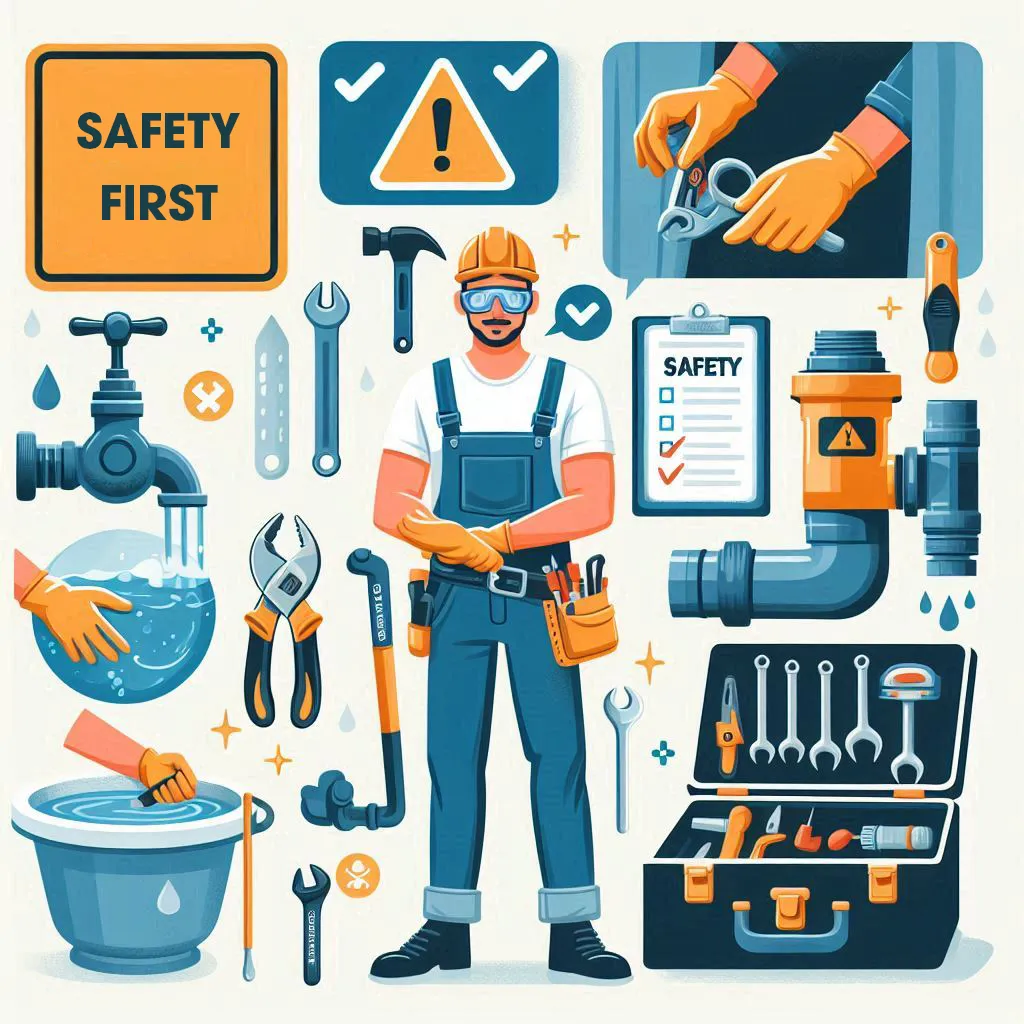
Most home plumbing jobs are well within a careful DIYer’s reach — but the two ways they go wrong are worth taking seriously before you pick up a wrench. The first is water damage from a mistake: a cross-threaded fitting or a supply line left under pressure can flood a room in minutes, and water damage and freezing already make up 22.6% of homeowners insurance losses (Insurance Information Institute, 2023). The second is personal injury — scalding water, electric shock where water meets wiring, chemical burns from drain cleaners, and gas. None of that means don’t do the work; it means know where the real hazards are and shut them down first. This guide covers the safety practices, the code rules behind them, and the line where a job stops being DIY.
Know Your System First: Where the Water Shuts Off
Before any project, know how to stop the water — both at the fixture and at the house. Every sink, toilet, and most appliances have a local shut-off valve on the supply line; turning it clockwise isolates that one fixture. The whole-house main shut-off valve stops water to the entire home and is the valve you reach for when a repair goes sideways or a pipe bursts. Find it, make sure it turns, and know the layout of the pipes you’ll be working near so you don’t cut or crimp a line you didn’t mean to. If a fixture valve is seized or weeping, replace it before you start — not mid-flood.
Essential Safety Practices for Every Job
- Shut off the water — and confirm it. Close the fixture valve or the main, then open the fixture to bleed the line and prove the flow has actually stopped before you break any connection. Pressure left in a line is what turns a five-minute job into a soaked cabinet.
- Wear real protection. Gloves guard against sharp burrs, hot pipe, and chemicals; safety goggles keep debris and splashing water out of your eyes (essential when cutting pipe or clearing a drain); closed, non-slip shoes matter on a wet floor.
- Treat water and electricity as a lethal pair. Under-sink, in bathrooms, near a water heater or washer, kill the power to nearby circuits at the breaker before you work. Receptacles in bathrooms, kitchens (countertop), laundry areas, and within 6 feet of any sink are required to be GFCI-protected (NEC 210.8(A)) — if yours aren’t, that’s a defect worth correcting, and never defeat or bypass a GFCI to get a tool to run.
- Use each tool for its job. A pipe wrench bites round pipe; an adjustable wrench turns nuts and can round off a fitting if you force it. Apply steady, controlled force so a slip doesn’t pinch a hand or crack a pipe — and over-tightening a plastic fitting cracks it as surely as under-tightening leaks. Our guide to essential plumbing tools covers safe use of each.
- Ventilate and light the space. Drain chemicals, solvent cements, and soldering all want airflow; a headlamp or work light keeps you from working blind in a cabinet.
Your basic safety kit
Keep these within reach before you start any plumbing task — all homeowner-grade:
- Work gloves and safety goggles — the two you’ll skip and regret.
- A headlamp or work light — both hands free in a dark cabinet.
- Buckets, towels, and a wet/dry vac — for the water that’s still in the line no matter how well you drained it.
- A pipe repair clamp and rag — to stop a nicked line fast while you shut off the main.
- A first-aid kit and a charged phone — with your gas utility’s emergency number and a plumber’s number saved.
The Hazards That Actually Hurt People
A few plumbing hazards send people to the emergency room or the insurer far more than the rest. Handle these with specific care:
- Chemical drain cleaners. Lead with the risk, not the convenience: they can burn skin and eyes, they release toxic gas if you mix products (never combine a bleach- and an acid- or ammonia-based cleaner), and repeated use damages pipes. Reach for a plunger, a hand auger, or pulling the P-trap first — and if a cleaner is already in a drain, don’t plunge it or you’ll splash caustic liquid.
- Scalding hot water. Set the water-heater thermostat to 120°F — hot enough for the house, low enough to cut the scald risk (water above about 140°F can cause a serious burn in seconds). New shower and tub-shower valves must be anti-scald pressure-balancing or thermostatic types limited to 120°F max (IPC 424.3, conforming to ASSE 1016).
- The water heater’s relief valve. Every tank heater has a temperature-and-pressure (T&P) relief valve (IPC 504.4) discharging down a pipe that ends near the floor (IPC 504.6). It is a safety device against tank rupture — never cap, plug, or block it. If it weeps, find out why; don’t silence it.
- Gas. Gas-line work is not a DIY task. If you ever smell gas (rotten egg / sulfur), leave the building immediately, don’t flip any switch or light anything, and call your gas utility’s emergency line or 911 from outside. Don’t hunt for the leak yourself.
- Sewage and drain water. Wastewater and a clogged main carry bacteria; wear gloves, keep it off cuts, and wash up after. A backup coming up through multiple fixtures is a stop-and-call-a-pro sign, not a plunge-harder one.
What safety gear costs
Protecting yourself is the cheapest part of any plumbing project. Treat these as ballpark ranges, not quotes — they vary by brand and region.
Work gloves ~$10–20 · Safety goggles ~$5–15 · Headlamp/work light ~$15–40 · Pipe repair clamp ~$8–25 · Wet/dry vac ~$50–120 · First-aid kit ~$15–40
The Pre-Job Safety Sequence
Run through this before you touch a fitting on any repair:
- Shut off the water at the fixture valve, or the main for anything bigger, and open the fixture to bleed the line.
- Kill the power to nearby circuits at the breaker if you’re working near outlets, a water heater, a disposal, or a washer.
- Put on gloves and goggles and set up a bucket and towels for the water still in the line.
- Light and ventilate the work area.
- Confirm no flow at the fixture, then begin — and keep the main’s location in mind in case you need it fast.
Emergencies: gas, shock, and flooding
If you smell gas, leave the building right away — don’t flip a light switch, use a phone indoors, or light anything — and call your gas utility’s emergency line or 911 from outside. In a major leak or flood, shut the main water valve first; if water has reached outlets, appliances, or a panel, do not wade in — cut power at the breaker only if you can reach it safely and dry, otherwise stay clear and call for help, because standing water plus electricity can be fatal. For a burst pipe you can’t isolate, leave the main off and call a licensed plumber. Treat serious burns, a chemical splash to the eyes, or any electric shock as a call to medical help, not a wait-and-see.
Knowing When to Call a Professional
DIY plumbing is about doing the right jobs well, not doing every job. Call a licensed plumber (or the relevant trade) when a task involves gas lines, a water heater’s gas or electrical connections, a main-line or sewer backup, opening walls or moving fixtures (permit-and-inspection work under local code), or anything you’re not confident you can shut down and control. A pro has the training, tools, and code knowledge to do it safely — and the cost of the call is almost always less than the cost of the flood or the injury a guessed-at repair can cause.
FAQs
Q: What protective gear should I wear for plumbing work?
A: At minimum, work gloves and safety goggles, plus closed non-slip shoes on wet floors. Gloves protect against sharp burrs, hot pipe, and chemicals; goggles keep debris and splashing water — and any drain-cleaner splash — out of your eyes.
Q: How do I shut off the water to a single fixture?
A: Find the small shut-off valve on the supply line at the fixture (under a sink, behind a toilet) and turn it clockwise. If there’s no local valve, or it won’t hold, shut off the main and open the fixture to bleed the line.
Q: What do I do if I accidentally cut or nick a pipe?
A: Shut off the water immediately — the fixture valve if it’s downstream, otherwise the main — and open a lower fixture to drain the line. A pipe repair clamp can stop the leak temporarily, but plan on a proper repair, and call a plumber if it’s a supply main or you can’t isolate it.
Q: Which plumbing tasks should I never DIY?
A: Gas-line work, a water heater’s gas or electrical connections, main sewer-line work, and any electrical work near water beyond resetting a GFCI. The risk of fire, gas leak, scalding, or shock is too high — these are licensed-trade jobs.
Q: What’s the first move in a serious plumbing emergency?
A: Shut off the main water valve. If you smell gas, leave and call the gas utility or 911 from outside without touching switches. If water has reached electrical equipment, keep clear and cut power only if you can do it safely and dry. Then call a professional.
Conclusion
Home plumbing is safe work when you respect the four things that actually cause harm — pressurized water, electricity near water, hot water and gas, and caustic chemicals. Know where the water and power shut off, wear gloves and goggles, keep the code rules on scalding, GFCIs, and relief valves in mind, and be honest about the jobs that belong to a licensed pro. Do that, and the savings of DIY never come at the price of a flooded room or a trip to the ER.
Sources & verification
- Water damage and freezing accounted for 22.6% of homeowners insurance losses (2023); about one in 67 insured homes files a water-damage/freezing claim per year — Insurance Information Institute, Facts + Statistics: Homeowners and renters insurance.
- Receptacles in bathrooms, kitchens (countertop), laundry areas, and within 6 ft of a sink, plus outdoors and unfinished basements, require GFCI protection — National Electrical Code (NFPA 70) 210.8(A), Dwelling Units (via UpCodes).
- Individual shower and tub-shower valves must be pressure-balancing or thermostatic anti-scald types (ASSE 1016) limited to a maximum 120°F (IPC 424.3) — International Plumbing Code 2021, Chapter 4 — Fixtures, Faucets and Fixture Fittings (via UpCodes).
- Storage water heaters require a temperature-and-pressure relief valve (IPC 504.4) with a discharge pipe run per IPC 504.6; the relief valve must never be capped or blocked — International Plumbing Code 2021, Chapter 5 — Water Heaters (via UpCodes).
Last verified: Jul 2026