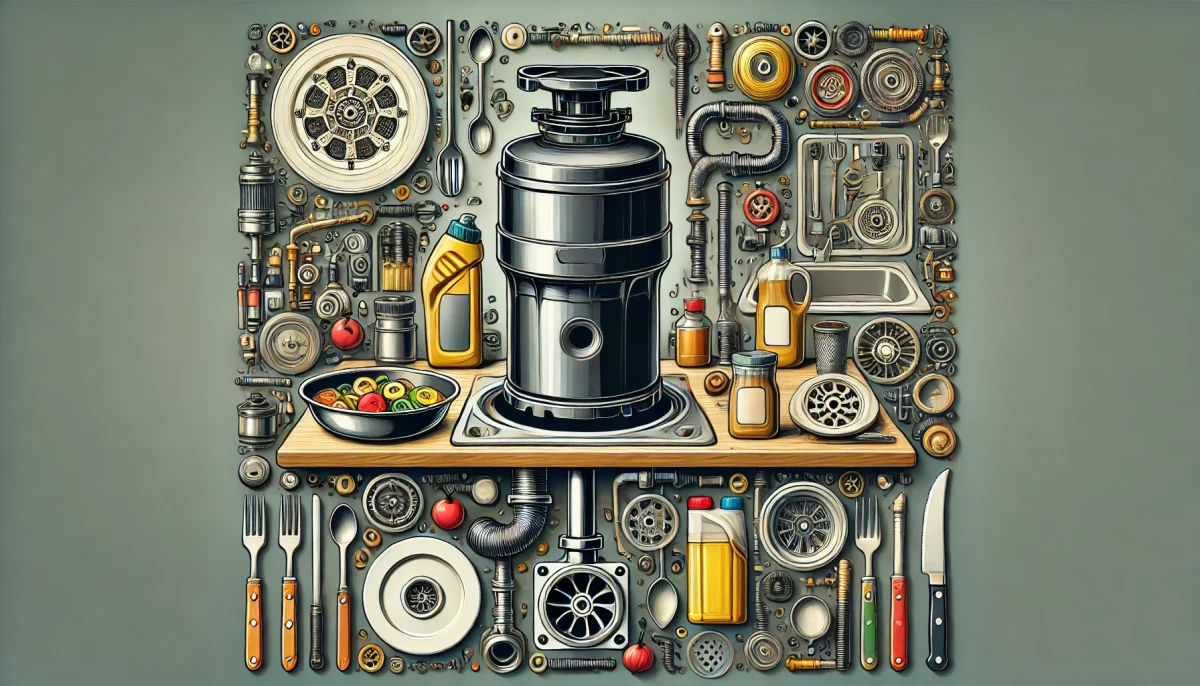
A garbage disposal is one of the most useful tools in a kitchen, making cleanup quicker, more efficient, and less messy. Whether you are cooking or washing dishes, a good garbage disposal can break down food scraps.
This helps prevent clogs and keeps your kitchen sink fresh. With so many garbage disposals on the market, it’s important to know which features to look for, such as durability, noise level, and capacity, to find the one that fits your needs.
In this guide, we’ll help you navigate through the options to find the best garbage disposal for your home. We’ll highlight the features that actually matter, compare the top-rated models, and share honest pricing and setup tips — so you can pick a quiet, strong unit for a busy kitchen or a compact model for a tight space with confidence.
Buying priorities: start here
- Size the motor to your household use — match horsepower to how much you cook and how many people you feed. Light/occasional use is fine at 1/2 HP; most families are well served by 3/4 HP; heavy daily use or tough scraps (fibrous vegetables, small bones) calls for 1 HP.
- Match septic-safe if you’re on a septic system — if your home is on septic, choose a unit rated for septic use (some include a septic-assist feature) so you don’t overload the tank.
- Insist on stainless grind components for longevity — stainless steel grinding components and chamber resist corrosion and wear far better than galvanized parts, which is what lets a disposal last years without trouble.
- Prioritize noise insulation — sound-insulation jackets and multi-stage grinding make a real difference in an open kitchen. Compare the manufacturer’s own noise claims (SoundSeal, SoundSHIELD, etc.).
- Confirm mount compatibility — a universal 3-bolt mount lets you swap onto an existing InSinkErator-style flange without re-plumbing the sink. Check this before you buy to save an install headache.
- Check the warranty length — a longer in-home limited warranty signals the maker’s confidence and protects your purchase. Read the actual term and what it covers (motor, corrosion, in-home service) rather than trusting a vague “lifetime” claim.
What to check before you buy
- Under-sink height and clearance — measure the cabinet so a taller 1 HP body actually fits above your trap
- Your existing mount type (most disposals use a 3-bolt mount; a universal mount swaps onto an InSinkErator-style flange)
- Whether a power-cord kit is needed — many disposals ship without a cord and must be corded or hardwired
- Dishwasher connection — if a dishwasher drains into the disposal, you’ll need the knock-out plug removed and the drain hose fitting
- A 120V outlet and switch under the sink (or a dedicated wall switch) to power and control the unit
What a garbage disposal costs
Price tracks mostly with motor size. Compact 1/3–1/2 HP units (like the GE GFC525N or KitchenAid KCDB250G) typically run about $70–$130. A mid-range 3/4 HP unit (like the Moen GXS75C) usually lands around $100–$200. Heavy-duty 1 HP models (like the Waste King L-8000 or InSinkErator Evolution) generally run about $180–$400. If you’re replacing an existing disposal on wiring that’s already in place, a plumber’s labor is commonly $100–$250; budget more if a new outlet, switch, or dedicated circuit has to be added.
1/3–1/2 HP: ~$70–$130 · 3/4 HP: ~$100–$200 · 1 HP: ~$180–$400 · Pro install: ~$100–$250
Kill the power before you touch it — and never reach inside
Before installing or clearing a disposal, disconnect the power at the breaker or unplug the unit — don’t rely on the wall switch. Wire it to code: use a proper power-cord kit or hardwire connection, and make sure the circuit is grounded and protected — a GFCI-protected outlet is the safest choice for an under-sink receptacle. And one myth worth killing: garbage disposals are not self-sharpening and they contain no spinning blades — but the blunt impellers and grind ring can still badly injure you. Never put your hand down a disposal. If something is jammed, cut the power first, then use tongs or an Allen wrench in the bottom hex socket to free it.
Why a Good Garbage Disposal Matters for Your Kitchen
A good garbage disposal is not just a luxury. It is a genuinely useful part of a modern kitchen that helps you manage food waste better.
They help reduce kitchen mess by grinding food scraps. They also help keep your drain clear and your pipes flowing.
Here are some of the main benefits of installing a reliable garbage disposal in your kitchen:
- Convenience: A garbage disposal can greatly reduce the time needed to clean up after meals. It easily gets rid of food waste right in your sink. No more scraping plates into the trash or dealing with foul-smelling garbage bags.
- Reduced Waste: A garbage disposal helps divert food scraps from the trash. According to the U.S. EPA, about a third of the U.S. food supply goes uneaten — sending scraps down a disposal to a wastewater plant is one way to keep some of that out of your trash can.
- Cleaner Kitchen: When food waste goes down the drain, it won’t sit in the trash can. This means fewer odors in your kitchen. You will also have a lower chance of attracting pests like ants or rodents.
A strong and efficient garbage disposal helps prevent drain clogs. It breaks food waste into small pieces that can easily flow through your plumbing.
Not all disposals are the same. The best model for your kitchen depends on your needs. Consider how much waste your household produces and how much noise you can tolerate.
Key Features to Consider When Choosing a Garbage Disposal
When shopping for a new garbage disposal, keep a few important factors in mind. This will help you find the right fit for your kitchen. Here are the most important features to consider:
Motor Power
People measure the motor power of a garbage disposal in horsepower (HP). This power is important for how well the unit grinds food waste. Here’s a breakdown of the most common motor power options:
- 1/3 HP: Best for light use in smaller households or where limited food waste is produced.
- 1/2 HP: A step up, this is ideal for smaller families or occasional use. Handles most food scraps but may struggle with tougher waste.
- 3/4 HP: A mid-range option suitable for most households. Can handle larger amounts of food waste and tougher items like fibrous vegetables.
- 1 HP and above: High-powered models ideal for large families or kitchens that generate significant food waste. Grinds tougher scraps like small bones with ease.
Grind Chamber
One of the main considerations is the grind chamber, where food waste is broken down. The size and material of the grind chamber are crucial for determining how much food waste your disposal can handle at once and how durable it will be.
Stainless steel chambers are ideal as they resist corrosion and wear over time.
Noise Level
Garbage disposals can be noisy, but newer models come with noise-reduction technology. If you prefer a quieter kitchen, choose models that manufacturers specifically design to minimize noise.
Features like sound insulation or multi-stage grinding systems can significantly reduce the amount of noise produced during operation.
Size and Capacity
Consider the size of the disposal, especially if you have limited under-sink space. Larger disposals with more powerful motors may require more room.
Matching the disposal’s grinding capacity to the size of your household is also important. A disposal that’s too small may struggle to keep up with your waste output.
Material and Durability
The durability of your garbage disposal largely depends on the materials used in its construction. Look for models with stainless steel grinding components, as they are more resistant to corrosion and wear.
These are particularly important if you want your disposal to last for years without needing repairs or replacement parts.
Ease of Installation
Many manufacturers design garbage disposals for DIY installation. However, some models may need professional help. This is especially true for those with complex wiring or plumbing changes.
If you’re planning to install the disposal yourself, look for models with easy-mount systems and clear instructions.
Warranty
Additionally, you’ll want to check the length and coverage of the disposal’s warranty. The best garbage disposals on the market often come with a multi-year in-home limited warranty, which helps protect your investment. Read the actual term rather than relying on a vague “lifetime” label — manufacturers publish specific durations by model (for example, Waste King’s L-8000 carries a 20-year limited warranty).
Models with longer warranties tend to be more reliable, as manufacturers stand by the quality of their product.
Types of Garbage Disposals
Garbage disposals typically fall into two categories: continuous feed and batch feed. Continuous feed models allow you to keep the disposal running while you add food waste, which makes them the most popular choice for busy kitchens.
On the other hand, batch feed models require you to load the food waste into the disposal first before it starts grinding, providing an extra layer of safety.
If you have a septic system, it’s essential to choose a disposal that’s designed for septic use. These disposals typically come with features like septic assist, which helps break down food waste more efficiently, reducing the load on your septic system.
The Best Ranked Garbage Disposals for Kitchen
Here are five of the best ranked garbage disposals for your kitchen. We based this on power, noise level, durability, and ease of installation.
InSinkErator Evolution Excel
- Power: 1 HP motor
- Noise Level: Quiet operation with insulated SoundSeal noise-reduction technology
- Features: Multi-stage MultiGrind grinding, stainless steel grind components, and a Jam-Sensor circuit that automatically boosts motor torque to power through jams.
- Why It’s Great: This high-end model is strong enough to handle tough food waste quietly, and it’s backed by a 10-year in-home limited warranty. It is perfect for large families or heavy kitchen use.
Waste King L-8000
- Power: 1 HP motor
- Noise Level: Moderate noise level with sound insulation
- Features: Stainless steel swivel impellers, easy EZ-Mount installation, a pre-installed power cord, and a 20-year limited warranty.
- Why It’s Great: The Waste King L-8000 is known for its power, quiet-for-its-class operation, and easy installation, making it a reliable choice for busy kitchens.
Moen GXS75C Host Series
- Power: ¾ HP motor
- Noise Level: SoundSHIELD sound-deadening insulation for quieter operation
- Features: Compact space-saving design, continuous feed, a Universal Xpress 3-bolt mount, septic-safe operation, and fast grinding.
- Why It’s Great: Perfect for mid-sized families, this model offers a balance of power and quiet operation in a compact package, backed by a 10-year in-home limited warranty.
GE GFC525N
- Power: ½ HP motor
- Noise Level: Standard noise levels for a smaller unit
- Features: Galvanized steel grinding components, a 2-level pre-cutter, jam-resistant design, and continuous feed.
- Why It’s Great: A budget-friendly option for smaller households or lighter use, offering dependable performance at a lower price.
KitchenAid KCDB250G
- Power: ½ HP motor
- Noise Level: Standard operation with a polystyrene sound barrier
- Features: Continuous feed design, compact size, and corrosion-resistant galvanized grinding components.
- Why It’s Great: This compact and affordable model is ideal for smaller kitchens or occasional use without sacrificing quality.
Comparison of Garbage Disposal Models by Feature
| InSinkErator Evolution Excel | 1 HP | Quiet | Stainless steel | $$$ |
| Waste King L-8000 | 1 HP | Moderate | Stainless steel | $$ |
| Moen GXS75C Host Series | ¾ HP | Quiet | Stainless steel | $$ |
| GE GFC525N | ½ HP | Standard | Galvanized steel | $ |
| KitchenAid KCDB250G | ½ HP | Standard | Galvanized steel | $ |
Installation and Compatibility
When installing a garbage disposal, it’s important to ensure that it fits with your sink drain. Some models are easier to install than others, so if you’re doing a DIY installation, you’ll want a disposal that comes with clear instructions and the necessary hardware. Compatibility with your current sink drain is crucial to avoid any complications.
If you’re unsure about the installation process or need help with fitting the disposal to your sink drain, hiring a plumber is always a good idea to ensure everything runs smoothly and to avoid leaks or improper connections.
Installation Tips for Your New Garbage Disposal
Installing a garbage disposal can be a straightforward process, especially if you’re replacing an old unit. Follow these steps to make the installation easier:
- Turn off the power: Always disconnect the power at the breaker (or unplug the unit) before starting the installation to avoid accidents — don’t rely on the wall switch.
- Use a power-cord kit: Many garbage disposals don’t come with a power cord, so you may need to purchase one separately. Use a kit designed for garbage disposals to ensure proper, code-compliant wiring.
- Seal with plumber’s putty: When installing the sink flange, apply a ring of plumber’s putty around the sink opening. This creates a watertight seal and prevents leaks.
- Align and secure the disposal: Once the disposal is connected, make sure it’s properly aligned and tighten the mounting ring. If a dishwasher drains into the unit, knock out the drain plug and connect the hose. Double-check that everything is secure before turning the power back on.
If you’re uncomfortable with electrical or plumbing work, it may be worth hiring a professional to ensure the installation is done correctly.
Maintenance Tips to Extend the Life of Your Garbage Disposal
To get the most out of your garbage disposal and keep it functioning smoothly, regular maintenance is key. Here’s how to take care of your disposal:
- Clean it Regularly
After using the disposal, run cold water for 30 seconds to flush out any remaining food particles. Once a week, grind a handful of ice cubes (a little rock salt helps) along with some citrus peels. The ice knocks built-up debris off the grinding components and the citrus freshens the chamber. To be clear, this cleans the unit — it does not “sharpen the blades,” because disposals have no blades: they shred waste with blunt impellers that fling food against a stationary grind ring, so there’s nothing to sharpen. - Avoid Hard Items
Don’t put hard materials like large bones, fruit pits, or metal objects down the disposal, as these can jam or damage the impellers and grinding components. - Use Cold Water
Always run cold water when using the disposal. Hot water can cause grease to liquefy and then solidify further down the pipes, leading to clogs. - Prevent Odors
To prevent bad smells, occasionally pour a mixture of baking soda and vinegar down the disposal, let it sit for 15 minutes, and then flush with cold water.
FAQs
-
What horsepower is best for a kitchen garbage disposal?
For most households, a ¾ HP disposal is sufficient. If you have a larger family or use the disposal frequently, a 1 HP model is recommended to handle larger amounts of food waste.
-
How do I reduce the noise of my garbage disposal?
Look for models with noise-reduction features like sound insulation or multi-stage grinding systems. These technologies can significantly reduce the noise level, making your kitchen more peaceful.
-
Can I install a garbage disposal myself?
Yes, most garbage disposals come with DIY-friendly instructions. However, if you’re unfamiliar with electrical work or plumbing, it’s safer to hire a professional to ensure the disposal is installed correctly.
-
What’s the average lifespan of a garbage disposal?
With proper maintenance, most garbage disposals last between 8 to 15 years. Regular cleaning and avoiding hard materials can extend its life.
-
Is a continuous feed or batch feed garbage disposal better?
continuous feed garbage disposals models are more common and convenient for busy kitchens. Batch feed models are safer for households with children since they only operate when the cover is in place.
Top Picks for Garbage Disposals
There are several high-quality garbage disposals on the market, but a few stand out for their power, efficiency, and durability.
InSinkErator, for example, is known for its reliable models with stainless steel grind chambers and long in-home warranties. Its Evolution series, in particular, is favored for its quiet operation and strong grinding capability, even for tougher food scraps.
Waste King is another trusted brand, offering powerful disposals at an affordable price point. Its Legend L-8000 is backed by a 20-year limited warranty, providing peace of mind. Waste King also offers models suited to homes with a septic system, making them a solid choice for homeowners in rural areas.
Conclusion
Finding the best garbage disposal comes down to understanding your kitchen’s needs and choosing a model with the right features, like a durable grind chamber, compatibility with your sink drain, and a solid warranty.
With many garbage disposals on the market offering various options, you’re sure to find one that suits your household, whether you’re concerned about noise, power, or compatibility with a septic system.
By considering factors like motor power, size, and ease of installation, you can confidently pick a disposal that will keep your kitchen running smoothly.
Remember to maintain your disposal regularly to extend its lifespan and prevent common issues like clogs or odors.
Ready to upgrade your kitchen? Explore these top garbage disposals and find the perfect fit for your home!
Sources & verification
- InSinkErator Evolution 1 HP — 1 HP, MultiGrind, SoundSeal, 10-year in-home limited warranty — InSinkErator.
- Waste King Garbage Disposal Limited Warranty — L-8000 (1 HP) = 20-year limited warranty (measured from purchase) — Waste King (official warranty).
- Moen GXS75C Host Series — 3/4 HP, SoundSHIELD, Universal Xpress 3-bolt mount, continuous feed, septic safe, 10-year warranty — Moen.
- GE DISPOSALL GFC525N — 1/2 HP continuous feed, galvanized components — GE Appliances.
- KitchenAid KCDB250G — 1/2 HP continuous feed, compact — KitchenAid.
- Household food waste (why diverting scraps matters) — U.S. EPA, Preventing Wasted Food at Home.
Last verified: Jul 2026