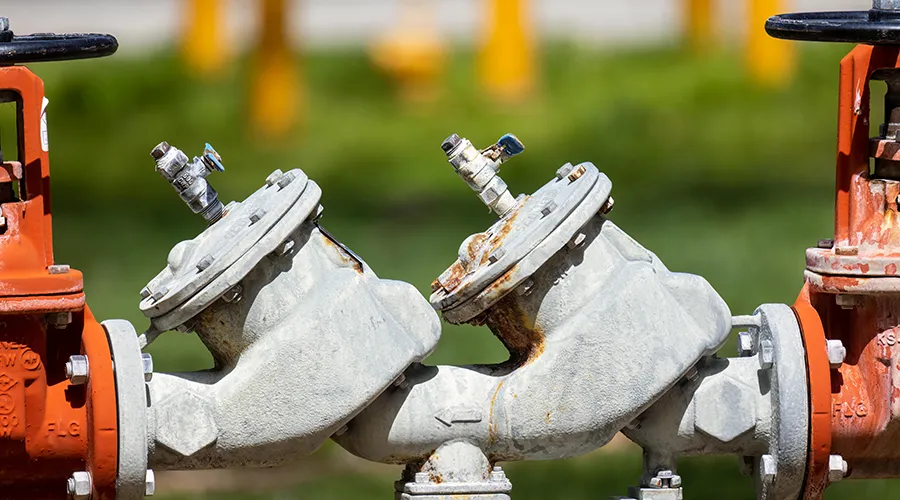
Backflow is the reverse flow of used or contaminated water back into the clean, potable supply — and every backflow device in your home exists to stop it. It happens when the normal direction of flow gets pushed backward through a cross-connection: any point where the drinking-water system can touch a non-potable source. This guide covers what causes backflow, which device protects against which hazard (with the ASSE standard numbers), what each one costs, and the handful of steps a homeowner can actually take to keep the supply safe.
Understanding Backflow: Causes and Risks
Backflow is the undesirable reversal of water flow in a plumbing system, and it can pull contaminants into the potable supply. It comes down to pressure — when the pressure balance that normally pushes water toward your fixtures gets reversed, water flows the wrong way through a cross-connection. The EPA’s Cross-Connection Control Manual sorts this into two mechanisms.
Causes of Backflow
- Backpressure: The pressure in a downstream system rises above the supply pressure and pushes water back toward the main. It’s caused by pumps, boilers, heat-exchange loops, or elevated tanks — anything that can generate more pressure than the incoming water line.
- Back-siphonage: A negative (sub-atmospheric) pressure in the supply line creates a vacuum that siphons water backward. It’s typically triggered by a sudden drop in main pressure — a water-main break, heavy fire-hydrant draw, or a burst of high demand nearby.
Risks of Backflow
- Contamination: Backflow can pull chemicals, bacteria, or waste into the clean water supply — and no household water filter is designed to catch a slug of pesticide or sewage siphoned in through a cross-connection. Prevention at the connection is the only real defense.
- Health hazards: Contaminated water can cause gastrointestinal illness, infections, and exposure to toxic chemicals — risks that reach past your own household when contamination reaches the public main.
- Legal and financial consequences: Most jurisdictions require backflow protection on higher-hazard connections. Failing an inspection, or causing contamination, can mean fines, forced repairs, and liability.
Which device for which hazard
Backflow devices aren’t interchangeable — the right one depends on the hazard level and whether you’re fighting backpressure, back-siphonage, or both. The ASSE International standard number (in parentheses) is what a plumber or inspector will specify:
- Air gap — sinks, dishwashers, tanks. The most reliable method; a physical separation with no moving parts.
- Reduced-pressure principle assembly (RPZ / RP) — ASSE 1013 — high-hazard connections: boilers with chemical treatment, irrigation with fertilizer injection, commercial equipment. Handles both backpressure and back-siphonage.
- Double check valve assembly (DCVA) — ASSE 1015 — low-to-medium hazard, where both backpressure and back-siphonage are possible but the contaminant is a nuisance rather than a health threat.
- Pressure vacuum breaker (PVB) — ASSE 1020 — lawn-irrigation systems. Protects against back-siphonage only, so it can’t sit where backpressure occurs.
- Atmospheric vacuum breaker (AVB) — ASSE 1001 — simple back-siphonage protection for a single outlet with no downstream shutoff and no continuous pressure.
- Hose connection vacuum breaker (hose-bib) — ASSE 1011 — screws onto an outdoor spigot. The one device a homeowner can safely add themselves.
Backflow Prevention Devices
Each device works a little differently. Here’s what they are and where they belong, roughly from most to least protective:
Types of Backflow Prevention Devices
- Air gap: A physical vertical separation between a water outlet and the flood level of the receiving fixture — the simplest and most effective backflow preventer, because with nothing physically connecting the two, water can’t siphon back. Plumbing code requires the gap to be at least twice the diameter of the supply outlet, and never less than one inch. You already rely on air gaps at your kitchen faucet and dishwasher.
- Reduced-pressure principle assembly (RPZ) — ASSE 1013: Two independent check valves separated by a pressure-relief valve that dumps to atmosphere if either check fails. It’s the go-to for high-hazard connections involving hazardous chemicals, and it guards against both backpressure and back-siphonage. Testable — and must be tested.
- Double check valve assembly (DCVA) — ASSE 1015: Two check valves in series. Used in low-to-medium-hazard situations in residential and commercial systems, and it handles both backpressure and back-siphonage. Also a testable assembly.
- Pressure vacuum breaker (PVB) — ASSE 1020: A check valve plus an air-inlet valve that opens to break a vacuum. It protects against back-siphonage only — common on lawn-irrigation systems — and cannot be used where backpressure is possible. Testable.
- Atmospheric vacuum breaker (AVB) — ASSE 1001: The simplest back-siphonage device, with no test cocks. It must be installed downstream of the last shutoff valve and can’t be under continuous pressure, which limits where it’s allowed.
- Hose connection vacuum breaker (hose-bib) — ASSE 1011: A small brass fitting that threads onto an outdoor spigot or utility sink to stop back-siphonage through a garden hose. Cheap, and the one item on this list a homeowner can fit without a plumber.
Installation and Maintenance
- Installation: Testable assemblies (RPZ, DCVA, PVB) should be installed by a licensed plumber to meet local code — orientation, clearance, and compatible pipe materials all matter to how the device performs and drains.
- Maintenance: Testable assemblies must be tested on a schedule (see below) by a certified backflow tester, who checks that the check valves hold and the relief valve opens correctly, and replaces worn seals or springs. An air gap needs no testing — just don’t defeat it by submerging the outlet.
What backflow protection costs
Costs climb with the hazard level and the complexity of the device. A hose-bib vacuum breaker is pocket change and screws on in a minute; a full RPZ assembly is a professionally installed valve with a recurring test fee. Remember the ongoing cost: any testable assembly (RPZ, DCVA, PVB) has to be re-certified every year. Prices vary by size, brand, region, and how the job is quoted, so treat these as ballpark ranges, not quotes.
Hose-bib vacuum breaker ~$8–15 (DIY) · Atmospheric vacuum breaker ~$10–30 · Pressure vacuum breaker (PVB) ~$70–200 · Double check valve assembly ~$100–350 · RPZ assembly ~$150–600+ · Professional install often ~$150–500+ · Annual certified backflow test ~$35–100
This protects your drinking water — don’t defeat it
Backflow devices guard the potable water supply for your home and everyone downstream on the main, so this is not a corner to cut. Testable assemblies — RPZ, DCVA, and PVB — must be installed by a licensed plumber and tested every year by a certified backflow tester; that annual certification is a legal requirement in most jurisdictions, not optional maintenance. The one true homeowner-DIY item is a hose-bib vacuum breaker (ASSE 1011) on an outdoor spigot. Never remove, cap off, or bypass a backflow device to fix low pressure or a nuisance drip — a defeated device leaves an open cross-connection straight into your drinking water. If you suspect contamination, stop using the water and call a licensed plumber.
Common Cross-Connection Scenarios (Illustrative)
These aren’t specific incidents — they’re the classic, well-documented cross-connection setups that backflow prevention is designed to stop. If one of them describes your home, that’s exactly where protection belongs:
- Garden hose in the wrong place: A hose left sitting in a bucket of soapy water, a pool, or screwed into a pesticide/fertilizer sprayer is the textbook back-siphonage cross-connection. Drop the main pressure — a nearby water-main break or hydrant flow — and that liquid can be siphoned back through the hose. A hose-bib vacuum breaker (ASSE 1011) on the spigot stops it.
- Lawn-irrigation systems: Sprinkler heads sit at ground level in soil, fertilizer, and pet waste. Without a backflow assembly on the irrigation supply, back-siphonage can pull that contaminated water back inside — which is why code typically requires a PVB (ASSE 1020) or, where chemicals are injected, an RPZ (ASSE 1013).
- High-hazard equipment: Commercial dishwashers, boilers with chemical treatment, and pool/spa auto-fills all create connections between potable water and a non-potable or chemically treated system. These are high-hazard cross-connections where an RPZ assembly is the standard barrier.
- Add a hose-bib vacuum breaker to every outdoor spigot. An ASSE 1011 unit costs a few dollars and threads on by hand in under a minute — the highest-value DIY step here.
- Make sure high-hazard connections have the right assembly. Lawn irrigation, a boiler loop, and a pool or spa auto-fill each need a proper backflow assembly (PVB or RPZ). If you’re not sure what’s installed, have a plumber inspect it.
- Keep the air gaps intact at sinks and the dishwasher. Don’t submerge a faucet aerator or let a dishwasher drain hose sit below the flood rim — that quietly defeats the air gap you already have.
- Schedule the annual certified test. Any RPZ, DCVA, or PVB has to be tested each year by a certified backflow tester; put it on the calendar so you don’t miss the utility’s deadline.
- Know your main shutoff. Learn how to locate and use your main shutoff valve so you can isolate the house quickly if you ever suspect contamination.
FAQs
Q: What is the most common cause of backflow?
A: Back-siphonage from a sudden drop in main pressure — a water-main break, a fire hydrant flowing nearby, or a burst of heavy demand — is the most common trigger. It creates a vacuum that pulls water backward through any unprotected cross-connection.
Q: How often should backflow prevention devices be tested?
A: Testable assemblies — RPZ, DCVA, and PVB — must be tested once a year by a certified backflow tester, a requirement in most codes and water-utility programs. Air gaps and simple vacuum breakers aren’t testable; just don’t defeat them.
Q: Can I install a backflow prevention device myself?
A: Only the small stuff. A hose-bib vacuum breaker (ASSE 1011) threads onto an outdoor spigot by hand — that’s a safe DIY job. Testable assemblies (RPZ, DCVA, PVB) must be installed by a licensed plumber and certified annually, because incorrect installation can leave the connection unprotected.
Q: What are the signs of backflow in a plumbing system?
A: Discolored water, an unusual taste or odor (chemical, sulfur, or earthy), sediment, or a sudden change in pressure. If you notice any of these, stop using the water for drinking and cooking and contact a plumber to check for a cross-connection.
Q: Are backflow prevention devices required by law?
A: Yes — most local and state plumbing codes require backflow protection on higher-hazard connections such as irrigation systems, boilers, and commercial equipment, and water utilities enforce annual testing on those assemblies. Requirements vary by jurisdiction, so check with your local water provider.
Conclusion
Preventing backflow keeps your drinking water — and the neighborhood’s — free of contamination. Match the device to the hazard, keep your air gaps intact, add a hose-bib vacuum breaker to every outdoor spigot, and stay current on the annual certified test for any RPZ, DCVA, or PVB. When a connection is anything above low-hazard, that’s a licensed-plumber job, not a weekend project.
Sources & verification
- Backpressure vs. back-siphonage mechanisms, and the air gap rule — “the air gap must be twice the supply pipe diameter but never less than one inch” — U.S. EPA, Cross-Connection Control Manual (EPA 816-R-03-002).
- ASSE standard designations — RPZ (1013), double check valve assembly (1015), pressure vacuum breaker (1020), hose connection vacuum breaker (1011), atmospheric vacuum breaker (1001) — ASSE International, Product Standards.
- Testing, certification, and approval standards for backflow prevention assemblies — USC Foundation for Cross-Connection Control and Hydraulic Research (FCCCHR).
- “State law requires backflow prevention devices to be tested once every year by a certified tester” — Los Angeles County Public Works, Backflow Prevention Program.
Last verified: Jul 2026