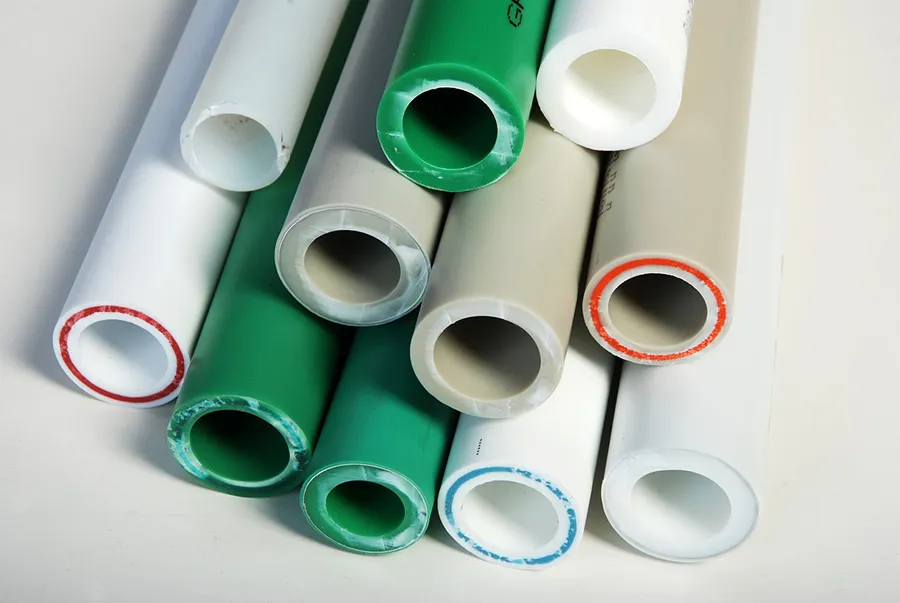
Getting pipe sizing right is the difference between a shower that holds pressure when the dishwasher kicks on and one that trickles. According to EPA WaterSense, the average American family uses more than 300 gallons of water per day at home, and every drop moves through supply and drain lines that have to be sized for the demand placed on them. This guide focuses on the part homeowners and remodelers get wrong most often: choosing pipe diameter for the flow, pressure, and run length a fixture actually needs. Material selection matters too, but it’s a deep topic of its own — for a full material-by-material breakdown, see our comprehensive guide to common pipe materials. Here, the priority is sizing.
Sizing at a glance
These rule-of-thumb diameters cover most residential supply work. Use them as a starting decision aid, then confirm against your local code — which sizes by demand, not habit:
- ½″ — individual fixtures and short branch lines (a single faucet, toilet, or hose bibb).
- ¾″ — the main supply run and any line feeding several fixtures at once.
- 1″ — long runs, high-demand homes, or where you need to hold pressure across a big fixture count.
- Codes don’t guess. The IPC and UPC size supply piping by Water Supply Fixture Units (WSFU) — each fixture is assigned a unit value, you total them, and the table gives the required diameter. The ½″/¾″ conventions above are what that math usually lands on for a house.
How Diameter Affects Flow and Pressure
Pipe diameter is the single biggest lever you have over how a plumbing system performs. Too small and you starve fixtures of flow and see pressure sag whenever two taps run together; too large and you waste money, slow the water enough to lose heat in hot lines, and can invite sediment to settle. The goal is to match the pipe to the job. A ½-inch line is plenty for one faucet, but ask it to feed a full bathroom group and the pressure drops the moment someone flushes.
Four factors drive the right size for any given run:
- Water flow requirements: Larger pipes carry higher flow rates, which is what areas with several fixtures — or a whole-home main — need to keep up with demand.
- Water pressure: A narrower pipe can raise velocity, but size it too small and it restricts flow and causes pressure drops, especially when multiple fixtures run at once.
- Length of the run: The farther water travels, the more friction it fights, and the more pressure it loses along the way. Long runs often step up a size to hold pressure at the far end.
- Number of fixtures served: A line feeding several fixtures has to carry their combined peak flow, not just one fixture’s draw — which is exactly what the fixture-unit method accounts for.
Sizing Supply Lines by Fixture Demand
Plumbing codes don’t leave sizing to feel. Both the International Plumbing Code (IPC) and the Uniform Plumbing Code (UPC) assign each fixture a Water Supply Fixture Unit (WSFU) value that reflects its typical flow and how often it runs. You add the WSFU for everything a pipe serves, then read the required diameter off a sizing table for your available pressure. As a rough sense of scale, a ¾-inch supply commonly handles up to about six fixture units, while a heavily loaded main steps up to 1 inch or larger. That’s why the ½″-branch, ¾″-main convention holds for so many houses — it’s what the fixture-unit math tends to produce. For a plain-language walk-through of the codes behind this, see our homeowner’s guide to basic plumbing codes and standards.
- List every fixture the line will feed. Work run by run: a branch to one bathroom, or the main serving the whole house. You size each segment for what sits downstream of it.
- Total the fixture units. Assign each fixture its WSFU value from the IPC or UPC table (use the “private” column for residential fixtures) and add them up for that segment.
- Check your available pressure. Note the static pressure at the meter or well tank and how far — and how many stories — the water has to travel. Longer, taller runs lose more pressure and may push you up a pipe size.
- Read the diameter off the sizing table. Match your total WSFU and pressure to the code table: individual fixtures and short branches usually land at ½″, mains and multi-fixture runs at ¾″, long or high-demand runs at 1″.
- Then choose the material. With the diameter set, pick a pipe rated for the job — hot vs. cold, indoor vs. exposed — using the summary below and our full materials guide. When a whole-home repipe or main upsize is on the table, have a licensed plumber confirm the sizing.
Matching Material to the Job
Once the diameter is set, the material has to suit the conditions of the run. Here’s the compact version; for the full pros-and-cons of each, head to our comprehensive guide to common pipe materials.
| Material | Common sizes | Best for | Watch out for |
|---|---|---|---|
| PEX | ½″ & ¾″ | Hot & cold supply, retrofits, bends without fittings | Not UV-stable — not for sustained outdoor/sunlight exposure |
| Copper | ½″–¾″ typical | Durable hot & cold supply, higher-pressure mains | Costlier; soldered joints; needs a dielectric union at steel |
| PVC | 1½″–2″ drains | Cold-water supply, drain-waste-vent (DWV) | Rated only to ~140°F — not for hot-water distribution |
| Galvanized steel | ½″–2″ | Legacy supply lines (pre-1960s homes) | Rusts internally, chokes flow; usually replaced on remodel |
Ballpark whole-home repipe cost
Repipe cost swings with house size, number of fixtures, how accessible the walls are, and local labor rates. PEX almost always comes in cheaper than copper because it installs faster with fewer fittings; copper costs more in both material and skilled labor. Treat these as ballpark ranges, not quotes — get a walk-through estimate for your home.
Whole-home repipe · PEX ~$4,000–8,000 · Copper ~$8,000–15,000+ · Varies by home size, fixture count, wall access & market
Never join dissimilar metals bare — and flag old supply lines
When you tie new copper into existing galvanized steel — a common repipe situation — never connect the two metals directly. Two dissimilar metals in contact with water form a small battery: an electrolyte plus a direct metal-to-metal path drives galvanic corrosion that eats the joint from the inside and eventually leaks. Use a dielectric union (or a brass fitting rated for the transition), which places a non-conductive insert between the metals to break the electrical path. It’s a cheap fitting that prevents an expensive failure. Separately, treat plumbing in a home built before June 1986 as a water-quality flag: lead solder, lead-containing pipe, and old galvanized service lines were still legal until the federal lead ban, and galvanized lines can also accumulate lead released upstream. If you’re repiping an older home, have the water tested and replace suspect service lines rather than tying into them.
FAQs
Q: How do I choose the right pipe size for my project?
A: Total the Water Supply Fixture Units for everything the line feeds, then read the required diameter off your code’s sizing table for your available pressure. As a rule of thumb, ½″ suits individual fixtures and short branches, ¾″ suits the main and multi-fixture runs, and 1″ handles long runs or high demand.
Q: Why does my shower lose pressure when another tap runs?
A: Usually the shared line is undersized for the combined flow, so total demand outruns what the pipe can carry. Stepping the shared run up from ½″ to ¾″, or shortening a long run, is the typical fix — size it to the fixtures it serves, not to a single tap.
Q: Can I use PVC pipes for hot water lines?
A: No. Standard PVC is rated only to about 140°F and will soften or degrade with sustained hot water. Use CPVC, PEX, or copper for hot-water distribution instead.
Q: How can I tell if my home has galvanized steel pipes?
A: Galvanized pipe is dull metallic gray and magnetic — a fridge magnet sticks to it. If the house predates the 1960s and you see rusty water or falling pressure, galvanized supply lines are a likely cause and a good candidate for replacement.
Q: Is it worth replacing old galvanized steel pipes?
A: Generally yes once they’re corroding. Internal rust narrows the bore, chokes flow, and can discolor water — and old galvanized lines are a water-quality concern in pre-1986 homes. Replacing them with PEX or copper restores flow and lets you size the new run correctly.
Conclusion
Good residential plumbing starts with diameter: size each run for the flow, pressure, and length it actually serves, lean on the fixture-unit method your code uses, and default to ½″ branches with a ¾″ main until the math says otherwise. Then pick a material rated for the conditions — and when new pipe meets old, use a dielectric union and check the water in any older home. Get the sizing right first, and the rest of the system has a fighting chance of running quietly for decades.
Sources & verification
- The average American family uses more than 300 gallons of water per day at home — U.S. EPA WaterSense, How We Use Water.
- Plumbing codes size supply piping by Water Supply Fixture Units (WSFU), with each fixture assigned a unit value that totals to a required diameter — UpCodes, IPC — Water Supply Fixture Units (WSFU) Assigned to Fixtures.
- PEX tubing has limited UV tolerance and is not intended for sustained outdoor or direct-sunlight exposure without protection — National Association of Home Builders (NAHB), UV Resistance of Certain Plastic Tubing.
- Standard PVC is rated for non-pressure use where the operating temperature will not exceed 140°F, so it is not used for hot-water distribution — Charlotte Pipe, PVC Schedule 40 DWV Submittal (technical data).
- Joining dissimilar metals (e.g., copper to galvanized steel) in the presence of water drives galvanic corrosion; a dielectric fitting inserts a non-conductive break to prevent it — U.S. NIH Office of Research Facilities, Technical Bulletin — Dielectric Fittings.
- The federal lead ban took effect in June 1986, so pre-1986 plumbing may contain lead solder, lead pipe, or old galvanized lines — a water-quality flag — U.S. EPA, Use of Lead-Free Pipes, Fittings, Fixtures, Solder, and Flux for Drinking Water.
Last verified: Jul 2026