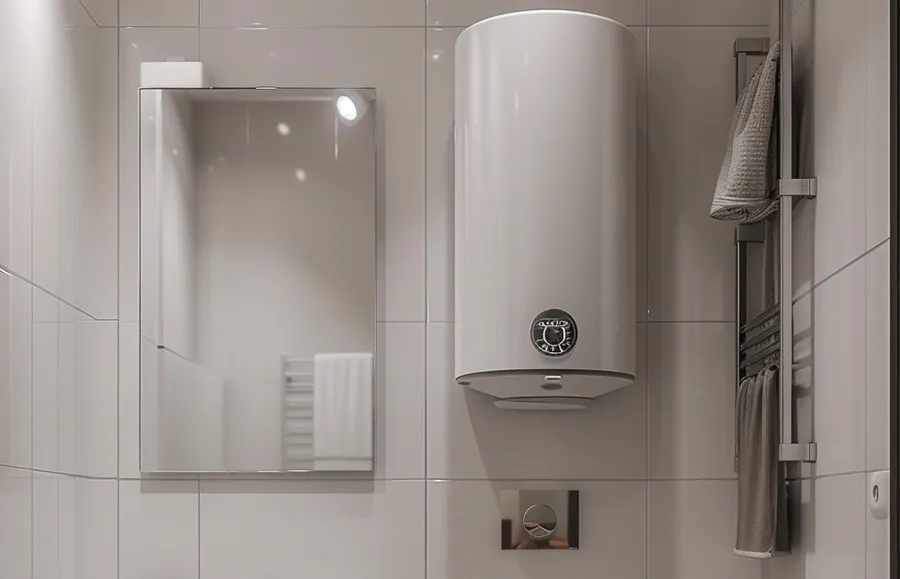
Nearly every home in the U.S. runs on some kind of water heater — it’s the appliance behind every hot shower, load of laundry, and sink of dishes, and it quietly accounts for a large share of household energy use. So when it’s time to buy or replace one, the choice matters. Picking the right water heater is a bit like picking the right vehicle: you wouldn’t put a compact commuter engine in a work truck, and you wouldn’t size a small point-of-use unit for a busy family of five. This guide breaks down the four main types, the parts that make them work, what to weigh before you buy, real-world install costs, and how to keep whatever you choose running safely for years.
Types of Water Heaters
Storage Tank Water Heaters
These are the most common type, built around an insulated tank that heats water and holds it until you need it. Household tanks typically run from 20 to 80 gallons, sized to demand. Because a storage heater keeps a full tank hot around the clock, it loses some heat while sitting idle — called standby loss — though modern insulation has cut that down. Storage tanks generally last about 8–12 years, so factor age into any repair-or-replace decision. If yours stops making hot water, our guide on a water heater not heating walks through the usual causes.
Tankless Water Heaters
Tankless, or on-demand, water heaters don’t store water. They fire only when you open a hot tap, heating water as it flows through — which eliminates standby losses and, per the U.S. Department of Energy, makes them roughly 24–34% more efficient than storage tanks in homes with moderate hot-water use. They also last a long time: the DOE puts tankless life expectancy at 20+ years, well beyond a typical tank. The trade-off is flow rate. A single unit delivers about 2–5 gallons per minute, so a busy household running several fixtures at once may need a larger gas model or more than one unit. Keeping the heat exchanger clear matters here — see our tankless water heater maintenance guide.
Hybrid Heat Pump Water Heaters
A hybrid heat pump water heater uses electricity to move heat — pulling warmth from the surrounding air into the tank — rather than generating it directly with a heating element. That makes it far more efficient: the DOE notes a heat pump can be two to three times more energy efficient than a conventional electric-resistance water heater. The catches are that it needs a fair amount of open air space around it to draw from, works best in a spot that stays roughly 40–90°F year-round, and carries a higher upfront price — often offset by federal or utility rebates.
Solar Water Heaters
Solar water heaters use roof-mounted collectors to capture the sun’s energy and a storage tank to hold the heated water, usually paired with a conventional backup for cloudy stretches. They can cut water-heating energy costs substantially, but their output depends heavily on local climate and sun exposure, and the installed cost is the highest of the four types.
Components and Operation
Each type is built around a few core parts. Knowing them makes sizing, maintenance, and troubleshooting far easier:
- Storage tank heaters: an insulated tank, a thermostat, a heating element (or a gas burner), a sacrificial anode rod, and a temperature & pressure (T&P) relief valve.
- Tankless heaters: a heat exchanger, a flow sensor, and controls that modulate the burner or element to hold the target temperature.
- Heat pump heaters: a compressor, an evaporator, and a heat exchanger, plus a storage tank and backup elements.
- Solar heaters: solar collectors, a heat-transfer loop, a storage tank, and a backup heat source for low-sun days.
What to decide before you buy
Before you shop by brand or price, settle these four questions — they narrow the field fast and keep you from over- or under-sizing the unit:
- Fuel and power — what’s available at the install spot: natural gas, propane, or electric? Gas units need proper venting; a heat pump or electric tankless may need an electrical upgrade.
- Capacity — for a tank, match the first-hour rating (FHR) to your busiest hour, not just the gallon count. For tankless, add up the flow rate (GPM) of the fixtures you’d run at once. A family of four often lands around a 50-gallon tank or a 7–10 GPM tankless.
- Space and venting — tankless units mount on a wall and free up floor space; heat pumps need open air around them; gas models need a code-compliant vent path.
- Efficiency (UEF) — compare the Uniform Energy Factor on the yellow EnergyGuide label. A higher UEF means lower operating cost; just compare units within the same size “bin.”
Factors to Consider When Choosing a Water Heater
Beyond the quick checklist above, weigh how these factors play out over the life of the unit:
- Energy efficiency: Check the Uniform Energy Factor (UEF) — the DOE’s current efficiency rating, which replaced the older Energy Factor (EF). A higher UEF means the unit turns more of its energy into hot water.
- Capacity: Match the heater to your household’s peak demand. Larger families may need a higher first-hour-rating tank or multiple tankless units.
- Installation requirements: Tankless and heat-pump units have specific needs — venting and possibly a gas-line upsize for tankless, open air space for heat pumps, and adequate electrical capacity for either.
- Regional considerations: Solar heaters shine in sunny climates, while heat pumps lose some efficiency in consistently cold spaces like an unheated garage.
Ballpark installed cost by type
Purchase-plus-installation cost varies widely by brand, region, fuel, and how much has to change at the install spot (venting, gas line, or electrical). Tanks are cheapest to buy and install; tankless, heat-pump, and solar systems cost more upfront but can lower running costs, and heat-pump and solar units often qualify for federal or utility rebates that aren’t reflected below. Treat these as ballpark ranges, not quotes.
Storage tank ~$900–2,500 · Tankless ~$2,000–5,500 · Heat pump / hybrid ~$1,800–4,500 · Solar ~$3,000–10,000 · Installed, before any rebates or tax credits; varies by market
Pros and Cons of Each Type
Storage Tank Water Heaters
- Pros: Lowest upfront cost, simple and familiar to install and service.
- Cons: Standby heat loss, shorter lifespan, and output capped by tank size.
Tankless Water Heaters
- Pros: Energy-efficient, endless hot water within its flow limit, compact, and long-lived (20+ years).
- Cons: Higher upfront cost, flow-rate limits, and possible gas-line or electrical upgrades.
Heat Pump Water Heaters
- Pros: Two to three times more efficient than electric resistance, low operating cost, often rebate-eligible.
- Cons: Higher initial cost, needs open air space, and less effective in cold locations.
Solar Water Heaters
- Pros: Very low running cost and eco-friendly once installed.
- Cons: Highest upfront cost, climate-dependent output, and usually needs a backup heater.
Set it to 120°F — and know your shutoffs
The DOE recommends setting the thermostat to 120°F. It’s the sweet spot: hot enough for showers, laundry, and dishwashing, low enough to save energy, and safe enough to cut scald risk — water at 140°F can cause a serious burn in seconds, while 120°F gives you far more reaction time, which matters with young children and older adults in the home. Before any service, kill the energy source first: for an electric unit, switch off its breaker; for a gas unit, turn the gas control to “off” or “pilot” and close the gas shutoff. Then close the cold-water supply valve on top of the tank. One part you should never cap, plug, or ignore is the temperature & pressure (T&P) relief valve — it’s the safety device that vents a tank building dangerous pressure, and a working one prevents a catastrophic failure. Leave gas connections, venting, and electrical hookups to a licensed pro; if you see water leaking from the bottom of the tank, treat it as a replace-soon warning, not a quick fix.
Annual Maintenance
A little upkeep each year keeps a water heater efficient and pushes its lifespan toward the high end of the range. Work through this sequence once a year (with the power or gas off and the tank cool), and call a pro for anything you’re not comfortable with:
- Flush the tank to clear sediment. On a storage tank, shut off the energy source and cold-water supply, connect a hose to the drain valve, and drain the tank to wash out mineral sediment that settles at the bottom. Sediment insulates the burner or element, wastes energy, and shortens tank life — flushing about once a year prevents that (more often on hard water).
- Test the T&P relief valve. Put a bucket under the discharge tube, lift the valve’s lever briefly to let hot water rush out, then let it snap closed. It should stop dripping. If it won’t reseat or never released, replace it — a stuck T&P valve is a real safety hazard.
- Check the anode rod. This sacrificial rod corrodes so your tank doesn’t. Inspect it every few years and replace it once it’s mostly eaten away (roughly every 3–5 years, sooner on hard or softened water) to hold off tank rust.
- Descale a tankless unit. Tankless heaters have no anode or tank to flush, but the heat exchanger scales up in hard water. Flush it with a descaling solution about once a year — our tankless water heater maintenance guide covers the full procedure.
When to Seek Professional Help
Some jobs belong with a licensed plumber. Anything involving gas connections, venting, or electrical hookups is a safety-and-code matter, not a weekend project — a bad gas or vent connection risks a leak or carbon-monoxide hazard. New installs and fuel-type swaps often mean reworking the supply lines and fittings that feed the unit; if that raises questions about your home’s plumbing, our guide to common pipe materials is a useful primer. And if an older heater needs frequent repairs or has passed its expected lifespan, replacing it with a more efficient model usually beats sinking money into an aging tank. When in doubt about sizing or installation, a quick consult with a pro saves time and prevents costly mistakes.
FAQs
Q: How long do water heaters typically last?
A: Storage tank heaters generally last about 8–12 years. Tankless units last much longer — the DOE puts them at 20+ years — because they don’t hold standing water that drives corrosion. Regular maintenance helps either type reach the top of its range.
Q: How do I know which size water heater I need?
A: Size a tank by its first-hour rating (how much hot water it delivers during a busy hour), not just gallons; size a tankless by adding up the flow rate (GPM) of the fixtures you’d run at once. As a rough guide, a family of four often needs about a 50-gallon tank or a 7–10 GPM tankless.
Q: Are tankless water heaters worth the investment?
A: They cost more upfront but are more efficient, save space, and last longer, so they can pay off over time — especially in smaller households or where you want to trim standby energy loss. High simultaneous demand may require a larger gas model or a second unit.
Q: What temperature should I set my water heater to?
A: The DOE recommends 120°F. It balances comfortable hot water with lower energy use and a much smaller scald risk than the 140°F many units ship at.
Q: What maintenance does a water heater need?
A: Once a year, flush a storage tank to clear sediment, test the T&P relief valve, and check the anode rod every few years. Descale a tankless unit annually, especially in hard-water areas.
Q: Can I install a water heater myself?
A: It’s best to hire a professional, especially for gas or electric units that require code-compliant connections, venting, and safety precautions. Improper work can void the warranty or create a serious hazard.
Conclusion
Choosing a water heater comes down to a few clear decisions: fuel, capacity, space, and efficiency. Storage tanks are cheapest to buy; tankless units are efficient and long-lived; heat pumps cut electric bills sharply; and solar leans on your climate. Whatever you land on, set it to 120°F, keep a working T&P valve, and give it a yearly flush or descale — that’s how you get the most years and the lowest bills out of it. And when the work crosses into gas, venting, or electrical, bring in a licensed plumber.
Sources & verification
- Water heating is present in nearly all U.S. homes and is one of the largest household energy end uses — U.S. EIA, Residential Energy Consumption Survey (RECS).
- Heat pump (hybrid) water heaters can be two to three times more energy efficient than conventional electric-resistance water heaters — U.S. DOE Energy Saver, Estimating Costs and Efficiency of Storage, Demand, and Heat Pump Water Heaters.
- Tankless/demand water heaters have a life expectancy of 20+ years, deliver about 2–5 GPM, and are 24–34% more efficient in moderate-use homes; storage tanks last ~10–15 years — U.S. DOE Energy Saver, Tankless or Demand-Type Water Heaters.
- Storage tank water heaters typically last about 8–12 years — A. O. Smith, How Long Do Water Heaters Last?.
- The Uniform Energy Factor (UEF) is the DOE’s current water-heater efficiency metric, which replaced the older Energy Factor (EF) — ENERGY STAR, What Is Uniform Energy Factor?.
- The DOE recommends setting the water heater thermostat to 120°F for energy savings and scald prevention — U.S. DOE Energy Saver, Water Heating.
- Size storage heaters by first-hour rating and tankless units by flow rate (GPM); household tanks run 20–80 gallons — U.S. DOE Energy Saver, Selecting a New Water Heater.
- Flush the tank about once a year to clear sediment, and replace the sacrificial anode rod as it corrodes to protect the tank — Rheem, How Often to Flush Your Water Heater.
- Testing the T&P relief valve and descaling tankless heat exchangers keep units running safely and efficiently — Rheem, Keep Your Tank and Tankless Water Heaters at Peak Performance.
Last verified: Jul 2026